
The Common Cold: A Comprehensive Integrative Medicine Approach to Etiology, Immunopathogenesis, Clinical Management, and African Herbal Pharmacology
By Livy-Elcon Emereonye
Abstract
The common cold is the most prevalent acute respiratory illness globally, imposing a significant burden on healthcare systems, economies, and quality of life. Despite its self-limiting nature, its high transmissibility, recurrence, and potential for complications underscore the need for a comprehensive management strategy. Conventional biomedical approaches remain largely symptomatic, with no definitive antiviral cure for most causative agents. Integrative medicine offers a multidimensional framework that combines conventional therapeutics with nutritional optimization, phytomedicine, and lifestyle interventions aimed at enhancing host immunity and reducing disease burden. This paper provides a detailed analysis of the virology, immunopathogenesis, and clinical features of the common cold while critically examining evidence-based integrative interventions, with a particular emphasis on African medicinal plants and their pharmacological relevance. The integration of traditional knowledge with modern clinical evidence presents a promising pathway for improved management and prevention of upper respiratory tract infections.
Introduction
The common cold represents a paradox in modern medicine: a disease of immense prevalence yet limited definitive therapeutic options. It is responsible for millions of outpatient visits annually and constitutes a leading cause of absenteeism from work and school. Although often dismissed as trivial, the cumulative socio-economic impact is substantial, particularly in low- and middle-income countries where healthcare access and preventive strategies may be suboptimal.
From an integrative medicine perspective, the common cold extends beyond a simple viral infection. It reflects a dynamic interaction between pathogen virulence, host immune competence, environmental exposures, and socio-behavioral determinants of health. This broader lens is particularly relevant in African contexts, where traditional medicine remains a primary healthcare resource for a significant proportion of the population.
This work aims to bridge conventional biomedical understanding with integrative and ethnopharmacological approaches, thereby offering a holistic framework for managing the common cold.
Virology and Etiological Agents
The common cold is caused by a heterogeneous group of viruses, with over 200 identified serotypes. Rhinoviruses remain the predominant pathogens, accounting for approximately 40–50% of cases. These viruses belong to the Picornaviridae family and exhibit high genetic variability, which complicates vaccine development.
Other significant viral agents include:
Coronaviruses (non-SARS strains associated with mild infections)
Respiratory syncytial virus (RSV)
Adenoviruses
Parainfluenza viruses
Enteroviruses
Rhinoviruses primarily replicate at temperatures between 33–35°C, corresponding to the nasal cavity environment, which explains their predilection for the upper respiratory tract.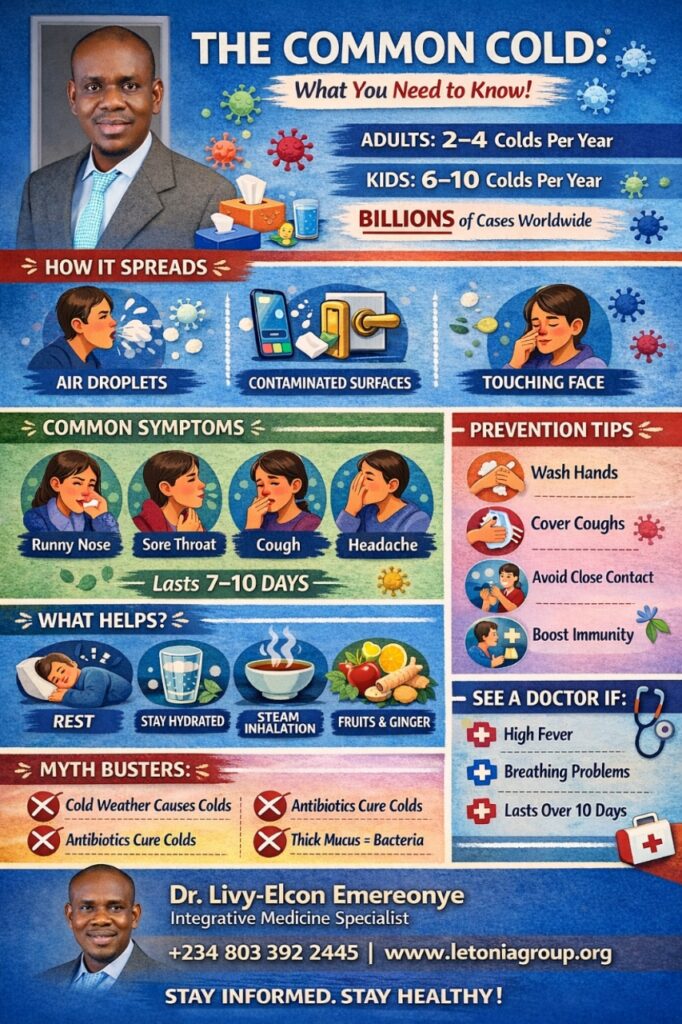
Immunopathogenesis
The pathophysiology of the common cold is driven more by host immune responses than by direct viral cytotoxicity. Following viral entry, pathogens bind to specific receptors such as ICAM-1 on nasal epithelial cells. Viral replication triggers the activation of innate immune responses, including:
Release of cytokines (e.g., IL-1, IL-6, TNF-α)
Production of interferons
Recruitment of neutrophils and lymphocytes
These immune mediators are responsible for the hallmark symptoms of the common cold. For instance:
Bradykinin contributes to sore throat and nasal irritation
Histamine promotes sneezing and rhinorrhea
Prostaglandins induce fever and malaise
Importantly, symptom severity often correlates with the intensity of the inflammatory response rather than viral load alone. This insight provides a rationale for integrative therapies that modulate inflammation and immune balance.
Clinical Features and Diagnosis
The incubation period ranges from 1–3 days. Symptoms typically peak within 48–72 hours and resolve within 7–10 days. Common manifestations include:
Nasal congestion and discharge
Sneezing
Sore throat
Cough
Mild fever (especially in children)
Fatigue and malaise
Diagnosis is primarily clinical, based on symptomatology. Laboratory testing is rarely required except in severe or atypical cases.
Limitations of Conventional Management
Conventional treatment focuses on symptomatic relief and includes:
Analgesics (paracetamol, NSAIDs)
Antihistamines
Decongestants
Antitussives
However, several limitations persist:
1. Lack of curative therapy
2. Adverse effects of medications (e.g., sedation from antihistamines)
3. Widespread misuse of antibiotics, contributing to antimicrobial resistance
4. Neglect of immune system optimization
These limitations highlight the need for complementary approaches.
Integrative Medicine Framework
Integrative medicine addresses the common cold through four major domains:
1. Immune enhancement
2. Symptom modulation
3. Reduction of inflammation
4. Prevention of recurrence
Nutritional Immunology and Clinical Evidence
Vitamin C
Vitamin C (ascorbic acid) is one of the most extensively studied nutrients in cold management. A Cochrane review (Hemilä & Chalker, 2013) demonstrated that regular supplementation reduces the duration of colds by approximately 8% in adults and 14% in children.
Mechanisms include:
Antioxidant activity
Enhancement of leukocyte function
Reduction of oxidative stress
Vitamin D
Vitamin D plays a crucial role in innate immunity by inducing antimicrobial peptides such as cathelicidin. A meta-analysis (Martineau et al., 2017) found that vitamin D supplementation reduces the risk of acute respiratory infections, particularly in deficient individuals.
Zinc
Zinc has antiviral properties and inhibits rhinovirus replication. Clinical trials indicate that zinc lozenges may reduce the duration of cold symptoms when administered within 24 hours of onset (Singh & Das, 2013).
Phytomedicine: Global Evidence
Echinacea (Echinacea purpurea)
Echinacea has demonstrated immunomodulatory effects, including increased phagocytosis and cytokine regulation. Some randomized controlled trials suggest reduced symptom severity and duration.
Elderberry (Sambucus nigra)
Elderberry extracts have shown antiviral activity against influenza and other respiratory viruses. Clinical studies indicate shortened symptom duration and improved recovery rates.
African Herbal Pharmacology
A major strength of integrative medicine in Africa lies in its rich biodiversity and longstanding ethnomedical traditions. Several indigenous plants exhibit pharmacological activities relevant to the common cold.
Garcinia kola (Bitter Kola)
Garcinia kola is widely used in West Africa for respiratory conditions.
Pharmacological properties:
Antiviral activity (inhibition of viral replication)
Anti-inflammatory effects
Bronchodilatory potential
Active compounds:
Biflavonoids (e.g., kolaviron)
Studies have shown that kolaviron possesses antioxidant and anti-inflammatory properties, which may mitigate respiratory inflammation.
Zingiber officinale (Ginger)
Ginger is a cornerstone of both African and Asian traditional medicine.
Mechanisms:
Inhibition of pro-inflammatory cytokines
Antiviral activity against respiratory viruses
Enhancement of mucociliary clearance
Clinical relevance includes relief of sore throat, cough, and congestion.
Allium sativum (Garlic)
Garlic exhibits broad-spectrum antimicrobial effects.
Active compound:
Allicin
A randomized trial (Josling, 2001) demonstrated that garlic supplementation reduced the incidence of colds and improved recovery time.
Cymbopogon citratus (Lemongrass)
Lemongrass is commonly used as an herbal infusion.
Pharmacological effects:
Antipyretic
Antimicrobial
Mild sedative
Its essential oils contribute to respiratory relief and immune support.
Eucalyptus globulus
Used in steam inhalation therapy.
Active compound:
Eucalyptol (1,8-cineole)
Eucalyptol has been shown to:
Reduce airway inflammation
Improve mucus clearance
Enhance respiratory function
Piper guineense (Uziza)
Common in West African cuisine and medicine.
Properties:
Anti-inflammatory
Antimicrobial
Immune-modulating
Mechanistic Integration of Herbal Therapies
The effectiveness of herbal medicine in the common cold can be attributed to multiple mechanisms:
Direct antiviral activity
Immune modulation
Anti-inflammatory effects
Symptom relief (e.g., expectorant, decongestant actions)
Unlike single-target pharmaceutical agents, herbal remedies often exert multi-target effects, making them particularly suitable for complex conditions like viral respiratory infections.
Gut Microbiome and Immune Modulation
Emerging evidence highlights the role of the gut-lung axis in respiratory health. The gut microbiota influences immune responses through:
Regulation of T-cell activity
Production of short-chain fatty acids
Enhancement of mucosal immunity
Probiotics such as Lactobacillus and Bifidobacterium species have been shown to reduce the incidence and duration of respiratory infections.
Lifestyle Medicine
Sleep
Sleep deprivation significantly impairs immune function. A study by Cohen et al. (2009) demonstrated that individuals sleeping less than six hours per night were more susceptible to cold infections.
Stress Management
Chronic stress elevates cortisol levels, which suppress immune responses. Mind-body interventions such as meditation and breathing exercises improve immune resilience.
Physical Activity
Moderate exercise enhances immune surveillance, while excessive exertion may suppress immunity.
Prevention Strategies
Effective prevention combines:
Hand hygiene
Respiratory etiquette
Nutritional optimization
Herbal prophylaxis
Environmental control
Safety Considerations in Integrative Practice
While herbal medicine offers significant benefits, safety considerations are essential:
Potential herb-drug interactions
Variability in herbal preparations
Need for standardization and dosage regulation
Healthcare practitioners must adopt evidence-based approaches to ensure patient safety.
Future Directions
Research priorities include:
Clinical trials on African medicinal plants
Standardization of herbal formulations
Integration of traditional medicine into formal healthcare systems
Exploration of synergistic effects between herbs and pharmaceuticals
Conclusion
The common cold, though often underestimated, represents a complex interplay of virological, immunological, and environmental factors. Conventional medicine provides effective symptomatic relief but falls short in prevention and immune optimization. Integrative medicine bridges this gap by incorporating nutritional, herbal, and lifestyle interventions that enhance host resilience and reduce disease burden.
African herbal medicine, with its rich pharmacological potential, offers a valuable yet underutilized resource in the global fight against respiratory infections. By combining traditional knowledge with modern scientific validation, integrative medicine can deliver a more comprehensive and sustainable approach to managing the common cold.
Dr. Emereonye could be reached on: +234 803 3922 445
References
Barrett, B. (2003). Medicinal properties of Echinacea. Phytomedicine, 10(1), 66–86.
Cohen, S., Doyle, W. J., & Alper, C. M. (2009). Sleep habits and susceptibility to the common cold. Archives of Internal Medicine, 169(1), 62–67.
Eccles, R. (2005). Understanding the symptoms of the common cold. The Lancet Infectious Diseases, 5(11), 718–725.
Heikkinen, T., & Järvinen, A. (2003). The common cold. The Lancet, 361(9351), 51–59.
Hemilä, H., & Chalker, E. (2013). Vitamin C for preventing and treating the common cold. Cochrane Database of Systematic Reviews.
Iwu, M. M. (2014). Handbook of African Medicinal Plants. CRC Press.
Josling, P. (2001). Preventing the common cold with garlic supplementation. Advances in Therapy, 18(4), 189–193.
Martineau, A. R., et al. (2017). Vitamin D supplementation and acute respiratory infections. BMJ, 356, i6583.
Singh, M., & Das, R. R. (2013). Zinc for the common cold. Cochrane Database of Systematic Reviews.
World Health Organization. (2021). WHO global report on traditional medicine.
Allan, G. M., & Arroll, B. (2014). Prevention and treatment of the common cold: Making sense of the evidence. CMAJ, 186(3), 190–199.
Arroll, B. (2011). Common cold. BMJ Clinical Evidence, 2011, 1510.
Bachert, C., et al. (2009). Effect of cineole in patients with acute rhinosinusitis. Laryngoscope, 119(3), 525–532.
Barnes, J., Anderson, L. A., & Phillipson, J. D. (2007). Herbal Medicines (3rd ed.). Pharmaceutical Press.
Barrett, B., Brown, R., Rakel, D., et al. (2010). Echinacea for treating the common cold: A randomized trial. Annals of Internal Medicine, 153(12), 769–777.
Berkowitz, F. E. (1990). The common cold: Pathogenesis and treatment. Pediatric Clinics of North America, 37(4), 883–890.
Boskabady, M. H., et al. (2011). Pharmacological effects of Zingiber officinale on respiratory system. Avicenna Journal of Phytomedicine, 1(1), 25–36.
Calder, P. C. (2020). Nutrition, immunity and COVID-19. BMJ Nutrition, Prevention & Health, 3(1), 74–92.
Carr, A. C., & Maggini, S. (2017). Vitamin C and immune function. Nutrients, 9(11), 1211.
Cohen, S. (2005). Social status and susceptibility to respiratory infections. Annals of the New York Academy of Sciences, 896, 246–253.
Eccles, R. (2002). An explanation for the seasonality of acute upper respiratory tract viral infections. Acta Oto-Laryngologica, 122(2), 183–191.
Field, C. J., et al. (2002). Diet and immune function. British Journal of Nutrition, 88(S2), S73–S80.
Gleeson, M. (2007). Immune function in sport and exercise. Journal of Applied Physiology, 103(2), 693–699.
Hudson, J. B. (2009). The use of herbal extracts in the control of influenza. Journal of Medicinal Plants Research, 3(13), 1189–1195.
Iwalokun, B. A., et al. (2006). Antimicrobial evaluation of Garcinia kola. African Journal of Biotechnology, 5(9), 874–877.
Krawitz, C., et al. (2011). Inhibitory activity of a standardized elderberry liquid extract. BMC Complementary and Alternative Medicine, 11, 16.
Linde, K., et al. (2006). Echinacea for preventing and treating the common cold. Cochrane Database of Systematic Reviews.
Lissiman, E., Bhasale, A. L., & Cohen, M. (2014). Garlic for the common cold. Cochrane Database of Systematic Reviews.
Moghadamtousi, S. Z., et al. (2014). A review on antibacterial, antiviral, and antifungal activity of curcumin. BioMed Research International, 2014, 186864.
Nair, K. P., & Kandasamy, S. (2016). Pharmacological activities of Cymbopogon citratus. International Journal of Pharmaceutical Sciences Review and Research, 37(2), 1–8.
Nworu, C. S., et al. (2010). Immunomodulatory activity of Garcinia kola. International Journal of Applied Research in Natural Products, 3(2), 11–18.
Prather, K. A., Wang, C. C., & Schooley, R. T. (2020). Reducing transmission of airborne respiratory viruses. Science, 368(6498), 1422–1424.
Rakel, D., et al. (2011). Echinacea for treating the common cold. Annals of Internal Medicine, 153(12), 769–777.
Raut, J. S., & Karuppayil, S. M. (2014). A status review on the medicinal properties of essential oils. Industrial Crops and Products, 62, 250–264.
Sahin, F., et al. (2004). Biological activities of essential oils and their components. Food Control, 15(7), 549–554.
Singh, G., Kapoor, I. P. S., et al. (2008). Chemistry and antimicrobial activity of essential oils of ginger. Food and Chemical Toxicology, 46(10), 3295–3302.
Slavin, J. L. (2013). Fiber and prebiotics: Mechanisms and health benefits. Nutrients, 5(4), 1417–1435.
Tapsell, L. C., et al. (2006). Health benefits of herbs and spices. Medical Journal of Australia, 185(S4), S4–S24.
Tilburt, J. C., & Kaptchuk, T. J. (2008). Herbal medicine research and global health. BMJ, 337, a134.
Tiralongo, E., Wee, S. S., & Lea, R. A. (2016). Elderberry supplementation reduces cold duration. Nutrients, 8(4), 182.
Valko, M., et al. (2007). Free radicals and antioxidants in normal physiological functions. International Journal of Biochemistry & Cell Biology, 39(1), 44–84.
Wachtel-Galor, S., & Benzie, I. F. (2011). Herbal medicine: An introduction. Herbal Medicine: Biomolecular and Clinical Aspects.
Weber, J. M., et al. (2003). In vitro virucidal effects of Allium sativum. Planta Medica, 69(5), 435–438.
Yarnell, E. (2018). Botanical medicines for the respiratory tract. Alternative and Complementary Therapies, 24(2), 58–64.
Leave a comment