
Immunity and Disease – The Infedi® Factor

By Livy-Elcon Emereonye
Abstract
The human immune system represents the most sophisticated biological defense network, yet contemporary medical practice continues to prioritize pathogen suppression over host resilience. This article advances a polemical–scientific argument that immune competence is the primary determinant of disease outcomes, not mere exposure to pathogens. Drawing from immunology, epidemiology, and phytomedicine, this paper critiques reductionist tendencies in modern biomedicine and advocates for an integrative paradigm centered on immune strengthening. Within this framework, Infedi® capsules, formulated by Letonia Int’l Ltd, are examined as a case study in immune-enhancing, broad-spectrum phytotherapeutics. The article synthesizes mechanistic insights, clinical reasoning, and public health implications to argue for a systemic shift toward host-centered medicine.
Keywords: immunity, antimicrobial resistance, phytomedicine, integrative medicine, Infedi®, immune modulation
1. Introduction
Modern medicine has achieved remarkable success in acute care and infectious disease control; however, it remains conceptually imbalanced in its prioritization of pathogen elimination over immune optimization. This imbalance has contributed to rising antimicrobial resistance, chronic inflammatory diseases, and increased vulnerability to emerging infections (Murray et al., 2022; WHO, 2023).
The dominant biomedical paradigm assumes that pathogens are the primary drivers of disease. Yet, epidemiological evidence consistently demonstrates that exposure does not equate to disease manifestation. Instead, outcomes are mediated by immune competence, shaped by nutrition, genetics, environmental exposures, and systemic health (Chaplin, 2010).
This article advances a central thesis: disease is fundamentally a failure of immune containment rather than mere pathogen (in communicable disease) presence. It further proposes that integrative formulations such as Infedi® represent a scientifically grounded response to this paradigm gap.
2. Theoretical Framework: Immunity as Determinant of Health
2.1 Innate and Adaptive Immunity
The immune system comprises two interconnected arms: innate and adaptive immunity. Innate immunity provides rapid, nonspecific defense through mechanisms such as phagocytosis, complement activation, and natural killer cell activity. Adaptive immunity offers specificity and memory via T and B lymphocytes (Medzhitov, 2007).
These systems operate synergistically, forming a dynamic network rather than isolated components. Disruption in either arm compromises overall immune competence.
2.2 Host–Pathogen Interaction
Disease emergence depends on a triad: pathogen virulence, environmental context, and host immunity. Among these, host immunity is the most modifiable factor. For instance, only a small percentage of individuals infected with Mycobacterium tuberculosis develop active disease (WHO, 2023).
Similarly, viral infections such as influenza and SARS-CoV-2 demonstrate wide variability in clinical outcomes, reinforcing the centrality of immune resilience.
3. The Crisis of Antimicrobial Reductionism
3.1 Antimicrobial Resistance
Antimicrobial resistance (AMR) represents a global health emergency. Murray et al. (2022) estimated that AMR directly caused 1.27 million deaths in 2019. This crisis reflects systemic overreliance on antimicrobial agents without corresponding investment in immune strengthening.
3.2 Limitations of Pathogen-Centered Medicine
Reductionist approaches focus on eliminating pathogens but often neglect:
Immune system conditioning
Microbiome balance
Long-term resilience
Such approaches may yield short-term success but undermine long-term health stability.
4. Phytomedicine and Immune Modulation
4.1 Scientific Basis of Herbal Medicine
Phytomedicine offers multi-target therapeutic effects through bioactive compounds such as flavonoids, alkaloids, and terpenoids (Cowan, 1999; Newman & Cragg, 2020).
These compounds exhibit:
Antioxidant activity
Anti-inflammatory effects
Immunomodulatory properties
4.2 Mechanisms of Action
Herbal compounds influence immunity by:
Enhancing macrophage function
Stimulating cytokine production
Supporting antibody synthesis
Inhibiting microbial growth
Such mechanisms position phytomedicine as a viable complement to conventional therapies (Li et al., 2018).
5. The Infedi® Factor
5.1 Conceptual Foundation
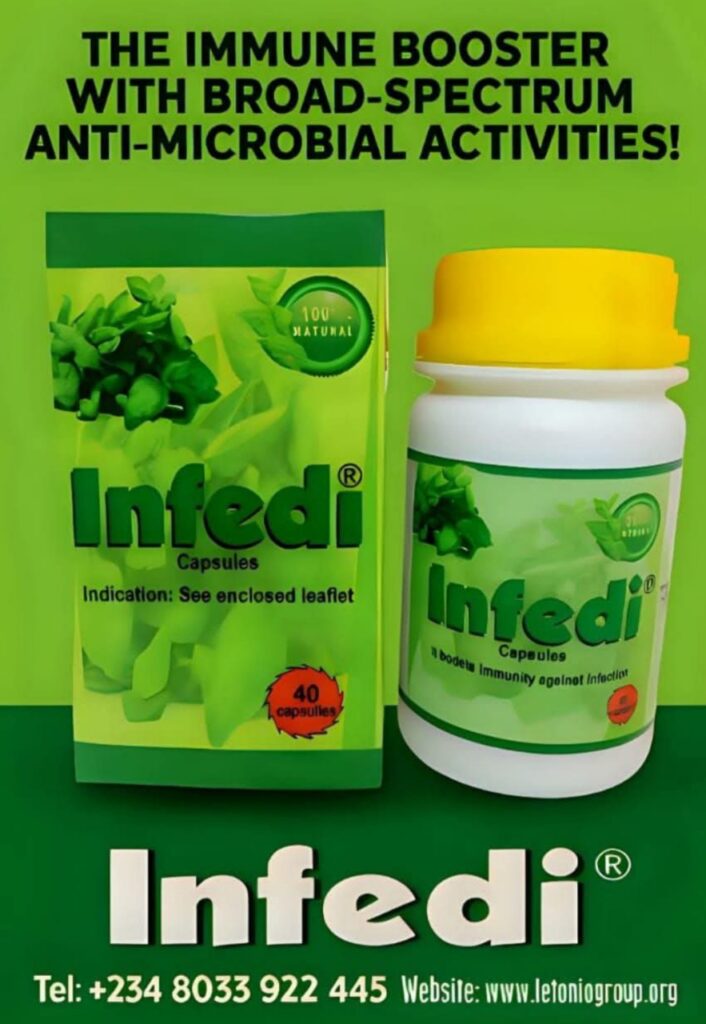
Infedi® capsules, formulated by Letonia Int’l Ltd, are designed to address the dual challenge of immune weakness and microbial burden. The formulation aligns with integrative medical principles emphasizing host fortification rather than pathogen suppression alone.
5.2 Pharmacological Rationale
Infedi® leverages synergistic phytochemicals to achieve:
Immune enhancement
Broad-spectrum antimicrobial activity
Anti-inflammatory balance
5.3 Immunomodulatory Effects
The formulation supports:
Activation of innate immune responses (e.g., macrophages, NK cells)
Enhancement of adaptive immunity (T- and B-cell function)
Regulation of cytokine signaling to prevent both deficiency and hyperinflammation
5.4 Antimicrobial Properties
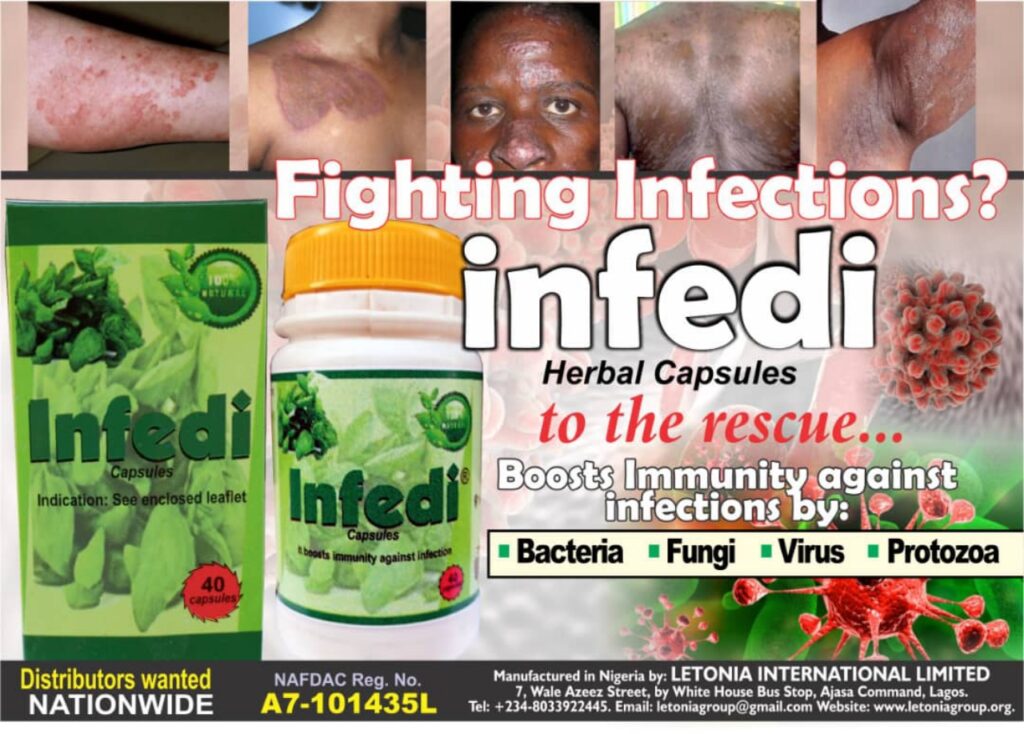
Infedi® demonstrates potential activity against bacteria, viruses, and fungi through multi-target mechanisms, including disruption of microbial membranes, inhibition of replication, and interference with metabolic pathways.
5.5 Clinical Implications
Infedi® can be useful in:
Recurrent infections
Immunocompromised states
Preventive healthcare strategies
Adjunctive therapy alongside conventional treatments
Its integrative positioning makes it particularly relevant in contexts where immune resilience determines clinical outcomes.
6. Discussion: Reframing Medical Priorities
The persistent marginalization of immune-centered approaches reflects economic, epistemological, and regulatory biases. Pharmaceutical systems favor patentable, single-target interventions, whereas immune strengthening often involves complex, multi-component systems that resist reductionist modeling.
Integrative medicine challenges these limitations by embracing biological complexity and prioritizing resilience over suppression. A host-centered model does not reject antimicrobial therapy but situates it within a broader strategy of immune competence.
7. Toward an Integrative Paradigm
Future healthcare systems must:
Integrate conventional and herbal medicine
Emphasize prevention and immune conditioning
Support research into multi-target therapeutics
Such a paradigm shift is essential for addressing antimicrobial resistance, emerging infections, and chronic immune-related diseases.
8. Conclusion
The evidence is clear: immunity is the decisive factor in disease outcomes. A shift toward immune-centered medicine is not optional but necessary.
Infedi® represents a practical application of this philosophy, offering a model for integrative therapeutic development that aligns with both traditional knowledge and modern scientific inquiry.
PS: Dr. Emereonye could be reached on: +234 803 3922 445
References
Aderem, A., & Ulevitch, R. J. (2000). Toll-like receptors in the induction of the innate immune response. Nature, 406(6797), 782–787. https://doi.org/10.1038/35021228
Akira, S., Uematsu, S., & Takeuchi, O. (2006). Pathogen recognition and innate immunity. Cell, 124(4), 783–801. https://doi.org/10.1016/j.cell.2006.02.015
Barnes, P. J. (2008). Immunology of asthma and chronic obstructive pulmonary disease. Nature Reviews Immunology, 8(3), 183–192. https://doi.org/10.1038/nri2254
Calder, P. C. (2013). Feeding the immune system. Proceedings of the Nutrition Society, 72(3), 299–309. https://doi.org/10.1017/S0029665113001286
Chaplin, D. D. (2010). Overview of the immune response. Journal of Allergy and Clinical Immunology, 125(2 Suppl 2), S3–S23. https://doi.org/10.1016/j.jaci.2009.12.980
Cowan, M. M. (1999). Plant products as antimicrobial agents. Clinical Microbiology Reviews, 12(4), 564–582. https://doi.org/10.1128/CMR.12.4.564
Delves, P. J., & Roitt, I. M. (2000). The immune system. New England Journal of Medicine, 343(1), 37–49. https://doi.org/10.1056/NEJM200007063430107
Gurib-Fakim, A. (2006). Medicinal plants: Traditions of yesterday and drugs of tomorrow. Molecular Aspects of Medicine, 27(1), 1–93. https://doi.org/10.1016/j.mam.2005.07.008
Iwu, M. M. (2014). Handbook of African medicinal plants (2nd ed.). CRC Press.
Li, X., Wu, L., Liu, W., Jin, Y., Chen, Q., Wang, L., & Zhang, D. (2018). A network pharmacology study of Chinese medicine QiShenYiQi to reveal its underlying multi-compound, multi-target, multi-pathway mode of action. Journal of Ethnopharmacology, 227, 135–145. https://doi.org/10.1016/j.jep.2018.08.015
Medzhitov, R. (2007). Recognition of microorganisms and activation of the immune response. Nature, 449(7164), 819–826. https://doi.org/10.1038/nature06246
Murray, C. J. L., Ikuta, K. S., Sharara, F., Swetschinski, L., Robles Aguilar, G., Gray, A., Han, C., Bisignano, C., Rao, P., Wool, E., Johnson, S. C., Browne, A. J., Chipeta, M. G., Fell, F., Hackett, S., Haines-Woodhouse, G., Hamadani, B. H. K., Kumaran, E. A. P., McManigal, B., … Naghavi, M. (2022). Global burden of bacterial antimicrobial resistance in 2019: A systematic analysis. The Lancet, 399(10325), 629–655. https://doi.org/10.1016/S0140-6736(21)02724-0
Newman, D. J., & Cragg, G. M. (2020). Natural products as sources of new drugs over nearly four decades. Journal of Natural Products, 83(3), 770–803. https://doi.org/10.1021/acs.jnatprod.9b01285
O’Neill, L. A. J., Golenbock, D., & Bowie, A. G. (2013). The history of Toll-like receptors—Redefining innate immunity. Nature Reviews Immunology, 13(6), 453–460. https://doi.org/10.1038/nri3446
Tilburt, J. C., & Kaptchuk, T. J. (2008). Herbal medicine research and global health: An ethical analysis. BMJ, 337, a185. https://doi.org/10.1136/bmj.a185
Ventola, C. L. (2015). The antibiotic resistance crisis: Part 1: Causes and threats. P & T, 40(4), 277–283.
Vlietinck, A. J., De Bruyne, T., Apers, S., & Pieters, L. (1998). Plant-derived leading compounds for chemotherapy of human immunodeficiency virus (HIV) infection. Planta Medica, 64(2), 97–109. https://doi.org/10.1055/s-2006-957390
World Health Organization. (2020). Antimicrobial resistance. https://www.who.int/news-room/fact-sheets/detail/antimicrobial-resistance
World Health Organization. (2023). Global tuberculosis report 2023. https://www.who.int/teams/global-tuberculosis-programme/tb-reports
Zhang, A. L., Xue, C. C., Fong, H. H., & Cheng, Y. C. (2012). Integration of herbal medicine into evidence-based clinical practice: Current status and issues. Chinese Medicine, 7, 12. https://doi.org/10.1186/1749-8546-7-12
Leave a comment