
World Lupus Day 2026: Make Lupus Visible
Understanding Lupus, Raising Awareness, and Advancing Hope
By Livy-Elcon Emereonye
Introduction
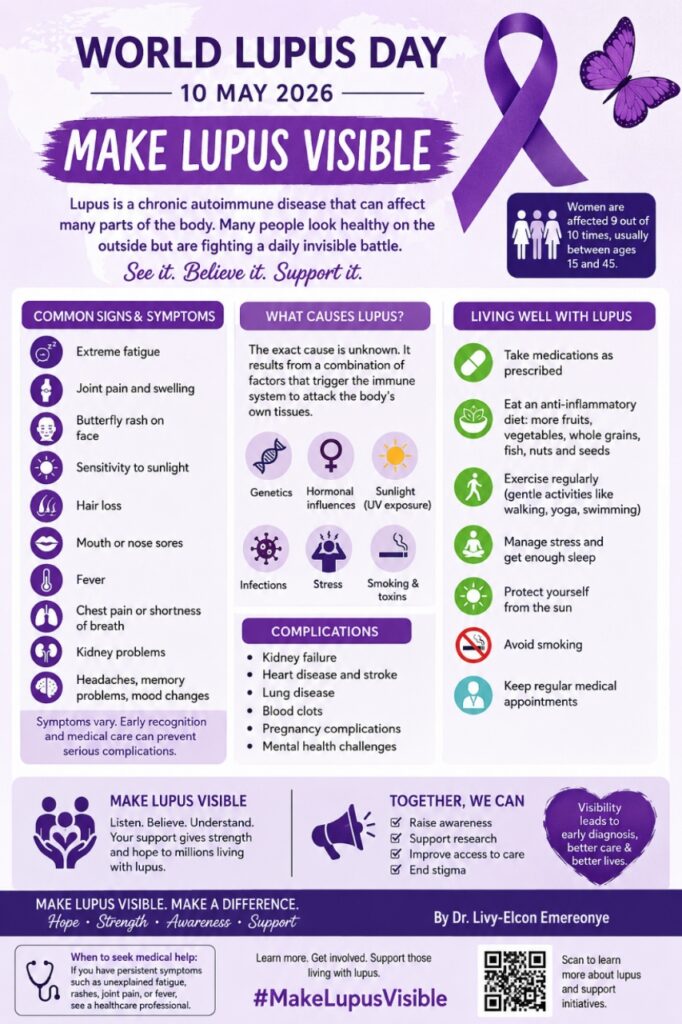
Every year on 10 May, the global health community commemorates World Lupus Day to raise awareness about lupus, support those living with the disease, and encourage governments, researchers, healthcare professionals, and communities to prioritize lupus care and research.
The 2026 World Lupus Day theme, “Make Lupus Visible,” is a powerful call to action. Lupus is often described as an “invisible illness” because many of its symptoms cannot easily be seen. Despite its potentially devastating effects, lupus remains poorly understood, underdiagnosed, and frequently misinterpreted. Many patients silently endure chronic pain, fatigue, emotional distress, organ damage, social stigma, and financial burdens while appearing outwardly healthy.
Making lupus visible means more than simply talking about the disease. It means recognizing the experiences of patients, improving public awareness, promoting early diagnosis, supporting scientific research, strengthening healthcare systems, and ensuring that those living with lupus receive compassion, dignity, and appropriate care.
World Lupus Day 2026 therefore offers an important opportunity to educate the public on the causes, symptoms, consequences, prevention strategies, and integrative management approaches to lupus.
What Is Lupus?
Lupus is a chronic autoimmune disease in which the body’s immune system mistakenly attacks its own tissues and organs. Normally, the immune system protects the body from harmful microorganisms such as bacteria and viruses. In lupus, however, immune defenses become overactive and attack healthy cells.

This abnormal immune response can affect multiple organs and systems, including:
Skin
Joints
Kidneys
Heart
Lungs
Blood vessels
Brain
Nervous system
Because lupus can involve many body systems, it is often called a systemic disease.
Types of Lupus
There are several forms of lupus, each with unique characteristics.
1. Systemic Lupus Erythematosus (SLE)
This is the most common and serious form of lupus. It affects multiple organs and can range from mild to life-threatening.
2. Cutaneous Lupus
This mainly affects the skin and may cause rashes, lesions, and photosensitivity.
3. Drug-Induced Lupus
Some medications can trigger lupus-like symptoms. Symptoms usually improve once the offending drug is stopped.
4. Neonatal Lupus
A rare condition affecting newborns of mothers with certain autoimmune antibodies.
Causes of Lupus
The exact cause of lupus remains unknown, but scientific evidence suggests that it results from a combination of genetic, hormonal, environmental, and immunological factors.
Genetic Factors
People with a family history of autoimmune diseases may have a higher risk of developing lupus.
Hormonal Influences
Lupus affects women far more than men, especially women of childbearing age. Hormones such as estrogen may play a role.
Environmental Triggers
Certain environmental factors may trigger lupus in genetically susceptible individuals, including:
Ultraviolet (UV) light exposure
Infections
Smoking
Stress
Certain medications
Environmental toxins
Immune System Dysfunction
Abnormal immune regulation leads to chronic inflammation and tissue damage.
Epidemiology and Global Burden
Lupus affects millions of people worldwide. According to global estimates:
About 5 million people may be living with some form of lupus globally.
Women account for nearly 90% of cases.
Lupus often develops between ages 15 and 45.
People of African, Asian, Hispanic, and Indigenous ancestry may experience more severe disease.

In Africa and many developing countries, lupus is frequently underdiagnosed due to:
Limited awareness
Inadequate diagnostic facilities
Shortage of specialists
Poverty and poor healthcare access
This contributes to delayed treatment and increased complications.
Signs and Symptoms of Lupus
Lupus symptoms vary widely from person to person. Some individuals may experience mild symptoms, while others develop severe organ damage.
Common symptoms include:
Persistent Fatigue
Extreme tiredness is one of the most common and disabling symptoms.
Joint Pain and Swelling
Painful, stiff, and swollen joints are frequent complaints.
Skin Rashes
The classic “butterfly rash” across the cheeks and nose is common in SLE.
Fever
Unexplained recurrent fever may occur.
Photosensitivity
Exposure to sunlight may trigger rashes and worsen symptoms.
Hair Loss
Many patients experience thinning or loss of hair.
Mouth Sores
Painful ulcers may occur inside the mouth or nose.
Kidney Problems
Lupus nephritis can lead to kidney failure if untreated.
Chest Pain
Inflammation of the heart lining or lungs can cause pain.
Neurological Symptoms
These may include:
Headaches
Memory problems
Seizures
Depression
Anxiety
Why Lupus Is Called an “Invisible Disease”
One of the major reasons behind the 2026 theme is the invisible nature of lupus.

Many people with lupus may look healthy externally while struggling internally with:
Severe pain
Exhaustion
Cognitive dysfunction
Emotional distress
Organ inflammation
As a result, patients are sometimes misunderstood, dismissed, or accused of exaggerating their symptoms.
Making lupus visible involves:
Believing patients
Listening compassionately
Increasing societal awareness
Reducing stigma
Promoting mental health support
Complications of Lupus
Without proper treatment, lupus can lead to serious complications.
Kidney Failure
Lupus nephritis is one of the leading causes of death among lupus patients.
Cardiovascular Disease
People with lupus have increased risk of:
Hypertension
Heart attacks
Stroke
Blood clots
Lung Disease
Inflammation can affect lung tissues and breathing.
Neurological Damage
Severe lupus may affect the brain and nervous system.
Pregnancy Complications
Pregnant women with lupus face increased risks of:
Miscarriage
Preterm birth
Preeclampsia
Mental Health Challenges
Chronic illness often contributes to:
Depression
Anxiety
Social isolation
Diagnosis of Lupus
Diagnosing lupus can be difficult because symptoms often mimic other diseases.
There is no single test for lupus. Diagnosis usually involves:
Medical History and Physical Examination
Doctors evaluate symptoms and clinical findings.
Blood Tests
Common tests include:
Antinuclear antibody (ANA) test
Anti-double stranded DNA antibodies
Complete blood count
Inflammatory markers
Urine Tests
These help assess kidney involvement.
Imaging Studies
X-rays, echocardiograms, or scans may be required.
Biopsy
Kidney or skin biopsies may confirm organ involvement.
Early diagnosis is essential for preventing irreversible organ damage.
Conventional Medical Treatment
Although there is currently no cure for lupus, treatment aims to:
Reduce inflammation
Prevent organ damage
Control symptoms
Improve quality of life
Common medications include:
Non-Steroidal Anti-Inflammatory Drugs (NSAIDs)
Used for pain and inflammation.
Corticosteroids
Powerful anti-inflammatory drugs for severe flares.
Antimalarial Drugs
Hydroxychloroquine is commonly prescribed and may reduce disease flares.

Immunosuppressive Drugs
These suppress excessive immune activity.
Biologic Therapies
Advanced targeted therapies are increasingly used in severe cases.
Treatment must be individualized and supervised by qualified healthcare professionals.
Integrative and Lifestyle Approaches to Lupus Management
An integrative approach combines evidence-based conventional medicine with healthy lifestyle interventions that support overall wellbeing.
Nutrition and Anti-Inflammatory Diet
Healthy eating may help reduce inflammation.
Recommended foods include:
Fruits and vegetables
Whole grains
Nuts and seeds
Fatty fish rich in omega-3
Legumes
Foods to reduce:
Excess sugar
Processed foods
Excess salt
Trans fats
Stress Management
Stress can trigger lupus flares. Helpful strategies include:
Meditation
Deep breathing
Counseling
Social support
Spiritual wellbeing practices
Regular Physical Activity
Gentle exercise improves:
Joint flexibility
Mood
Cardiovascular health
Energy levels
Examples include:
Walking
Stretching
Yoga
Swimming
Adequate Sleep
Sleep is essential for immune regulation and recovery.
Sun Protection
Patients should:
Use sunscreen
Wear protective clothing
Avoid excessive UV exposure
Smoking Cessation
Smoking worsens lupus symptoms and cardiovascular risks.

The Psychosocial Burden of Lupus
Living with lupus can profoundly affect social, emotional, and economic wellbeing.
Patients may experience:
Job loss
Educational disruption
Financial hardship
Family stress
Reduced self-esteem
Young women may particularly struggle with:
Body image concerns
Fertility fears
Relationship challenges
Support systems are therefore essential.
Importance of Public Awareness
Low awareness contributes significantly to delayed diagnosis and poor outcomes.
Public health education should focus on:
Early recognition of symptoms
Reducing stigma
Encouraging timely medical care
Supporting research funding
Schools, workplaces, media organizations, religious institutions, and healthcare systems all have roles to play in making lupus visible.
The Role of Governments and Health Institutions
Governments and policymakers should strengthen lupus care through:
Improved Healthcare Access
Patients need affordable access to:
Diagnostic services
Specialists
Essential medicines
Research Funding
More investment is needed in:
Autoimmune disease research
Drug development
Epidemiological studies
Public Health Campaigns
Awareness campaigns can improve early detection.
Health Insurance Coverage
Many lupus patients face lifelong treatment expenses.
Scientific Advances and Future Prospects
Research into lupus continues to expand rapidly.
Emerging areas include:
Precision medicine
Biomarker discovery
Gene-targeted therapies
Advanced biologic treatments
Artificial intelligence-assisted diagnosis
Scientists hope these advances will improve survival and quality of life.
Making Lupus Visible in Africa
In many African communities, lupus remains poorly recognized.
Patients are sometimes:
Misdiagnosed
Subjected to harmful myths
Delayed in receiving care
Challenges include:
Limited rheumatologists
Poor laboratory infrastructure
Economic barriers
There is urgent need for:
Medical training
Community education
Improved healthcare investment
Support groups for patients and families
Supporting People Living with Lupus
Everyone can contribute to making lupus visible.
Families and Friends
Offer emotional support and understanding.
Employers
Provide flexible work accommodations where possible.
Healthcare Workers
Listen carefully and treat patients compassionately.
Media Organizations
Promote accurate information and awareness.
Communities
Fight stigma and encourage empathy.
Conclusion
World Lupus Day 2026, with the theme “Make Lupus Visible,” reminds humanity that many battles are fought silently within the body and mind. Lupus is not merely a medical condition; it is a profound public health, social, psychological, and economic challenge affecting millions of individuals and families worldwide.
Making lupus visible means recognizing the pain behind the smiles, the fatigue behind the strength, and the resilience behind every patient’s journey. It means replacing ignorance with knowledge, stigma with compassion, delay with early diagnosis, and hopelessness with scientific progress and supportive care.
As healthcare systems, governments, researchers, civil society organizations, and communities unite to improve lupus awareness and management, there is hope for a future where no patient suffers in silence and where every person living with lupus receives the dignity, care, and support they deserve.
On this World Lupus Day 2026, let us all join hands to make lupus visible — visible in policy, visible in healthcare priorities, visible in scientific research, and visible in the hearts of humanity.
PS: Dr. Emereonye could be reached on: +234 803 3922 445
References
1. World Lupus Federation. World Lupus Day Resources.
2. Centers for Disease Control and Prevention (CDC). Lupus Overview.
3. World Health Organization (WHO). Autoimmune Diseases and Public Health.
4. Lupus Foundation of America. Understanding Lupus.
5. National Institutes of Health (NIH). Systemic Lupus Erythematosus.
6. Mayo Clinic. Lupus: Symptoms and Causes.
7. European League Against Rheumatism (EULAR) Guidelines on Lupus Management.
8. American College of Rheumatology. Lupus Clinical Information.
Leave a comment