
World Health Day 2026: Together for Health, Standing with Science
By Livy-Elcon Emereonye
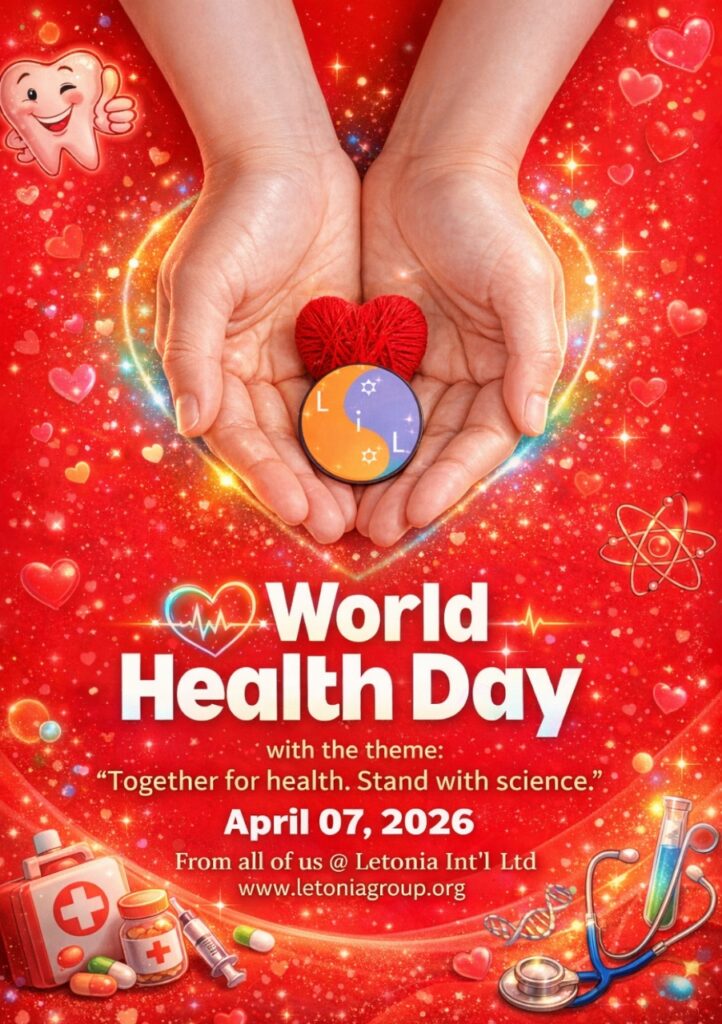
In an age where misinformation travels faster than microbes and skepticism often competes with evidence, the 2026 World Health Day theme—“Together for health. Stand with science”—is both timely and urgent. It is a rallying call to humanity: trust science, strengthen collaboration, and safeguard the delicate web that connects people, animals, plants, and the planet.
Health is no longer a siloed human concern. The COVID-19 pandemic, climate change, antimicrobial resistance, and emerging zoonotic diseases have made one truth unmistakably clear: our survival is intertwined. The concept of One Health—recognizing the interdependence of human, animal, and environmental health—is no longer theoretical; it is foundational.
Science is our most reliable compass in navigating this complex terrain. Vaccines, diagnostics, public health policies, climate modeling, and agricultural innovations are all products of rigorous scientific inquiry. Yet, science does not operate in isolation. Its true strength lies in collaboration—across borders, disciplines, and sectors.
In this spirit, there is a growing need for a positive and deliberate shift toward evidence-based integrative medicine and integrative health. By combining conventional medical practice with scientifically validated traditional, complementary, and lifestyle-based approaches, integrative health offers a more holistic, patient-centered model of care. When guided by evidence, regulation, and professional standards, it strengthens prevention, enhances treatment outcomes, and aligns with the broader One Health vision.
When scientists share data, when governments align policies with evidence, and when healthcare professionals—across orthodox and complementary systems—work together with veterinarians, environmentalists, and communities, the result is powerful: faster responses to outbreaks, safer food systems, healthier ecosystems, and more resilient populations.
Consider the growing threat of zoonotic diseases—illnesses transmitted from animals to humans. Preventing the next pandemic is not just about hospitals and medicines; it involves monitoring wildlife, regulating livestock practices, preserving biodiversity, and reducing environmental degradation. It demands cooperation between farmers, researchers, policymakers, and citizens alike.
Similarly, the health of plants—often overlooked—directly impacts nutrition, food security, and economic stability. Crop diseases, soil depletion, and climate stressors can trigger cascading effects on human health. Scientific collaboration in agriculture and environmental conservation is therefore not optional; it is essential.
However, standing with science also requires courage. It means confronting misinformation, investing in research, and ensuring equitable access to scientific advancements. It also means rigorously evaluating and integrating diverse medical knowledge systems, embracing what works, and discarding what does not.
On this World Health Day, the message is clear: the challenges we face are interconnected, and so must be our solutions. Science provides the tools, but collaboration provides the force.
To stand with science is to stand for truth over rumor, prevention over reaction, and unity over fragmentation. It is to recognize that the health of a child in Umuezealla-Ogboko community, a forest in the Amazon, livestock in rural Asia, and oceans across the globe are threads in the same fabric.
Together, guided by science—and strengthened by evidence-based integrative health—we can protect that fabric and secure a healthier, more sustainable future for all.
Leave a comment