
The Resurgent Ebola Virus Disease: A Public Health Challenge
By Livy-Elcon Emereonye
Introduction
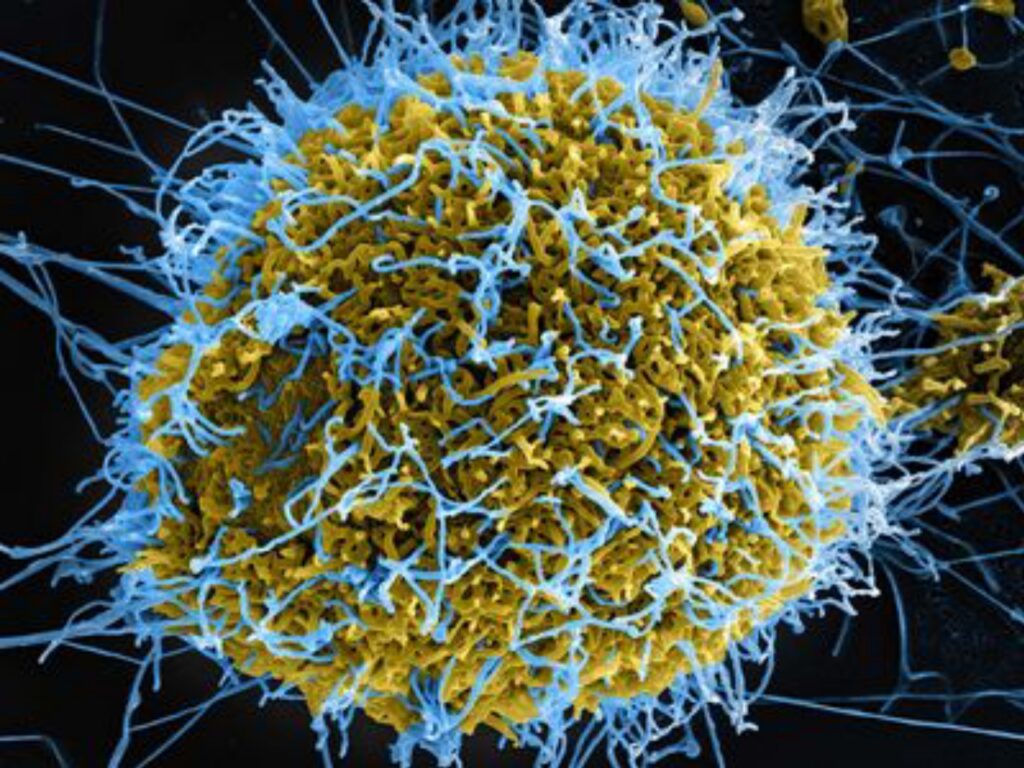
Ebola Virus Disease (EVD) remains one of the world’s most feared infectious diseases because of its high fatality rate, rapid transmission potential, and devastating impact on healthcare systems and communities. Since its discovery in 1976, Ebola has continued to pose serious public health threats, particularly in parts of Africa where outbreaks have repeatedly emerged. Although significant progress has been made in surveillance, laboratory diagnosis, vaccine development, treatment protocols, and emergency response systems, the recurrent resurgence of Ebola demonstrates that the disease remains a major global health concern.
The re-emergence of Ebola outbreaks in recent years has renewed discussions about the preparedness of healthcare systems, the importance of disease surveillance, the role of public health education, and the need for stronger international collaboration. Ebola outbreaks not only threaten lives directly but also disrupt economies, social structures, educational systems, healthcare delivery, and public confidence.
The burden of Ebola is especially severe in low-resource settings where poverty, weak healthcare infrastructure, political instability, misinformation, and inadequate sanitation increase vulnerability to infectious disease outbreaks. In addition, increasing environmental disruption, deforestation, urbanization, and human interaction with wildlife reservoirs have contributed to the persistence and resurgence of zoonotic diseases such as Ebola.
The lessons learned from previous Ebola outbreaks, particularly the West African epidemic of 2014–2016 and subsequent outbreaks in the Democratic Republic of Congo and Uganda, have shown that preparedness and rapid response are essential for reducing mortality and preventing widespread transmission.
This article examines the resurgence of Ebola Virus Disease as a major public health challenge. It explores the nature of the disease, modes of transmission, clinical manifestations, epidemiology, contributing factors to resurgence, public health implications, prevention and control strategies, and the role of integrative and community-based healthcare approaches.
Understanding Ebola Virus Disease
Ebola Virus Disease is a severe and often fatal illness caused by viruses belonging to the genus Ebolavirus within the family Filoviridae. The disease was first identified in 1976 near the Ebola River in what is now the Democratic Republic of Congo.
Several species of Ebola virus have been identified, including:
-Zaire ebolavirus
-Sudan ebolavirus
-Bundibugyo ebolavirus
-Taï Forest ebolavirus
-Reston ebolavirus
-Bombali ebolavirus
Among these, the Zaire ebolavirus species has been responsible for the deadliest outbreaks.
The disease has a high fatality rate, ranging from 25% to 90% depending on the outbreak, quality of healthcare, and timeliness of intervention.
Transmission of Ebola Virus Disease
Ebola is primarily a zoonotic disease, meaning it can spread from animals to humans. Fruit bats are considered the natural reservoirs of the virus.
Animal-to-Human Transmission
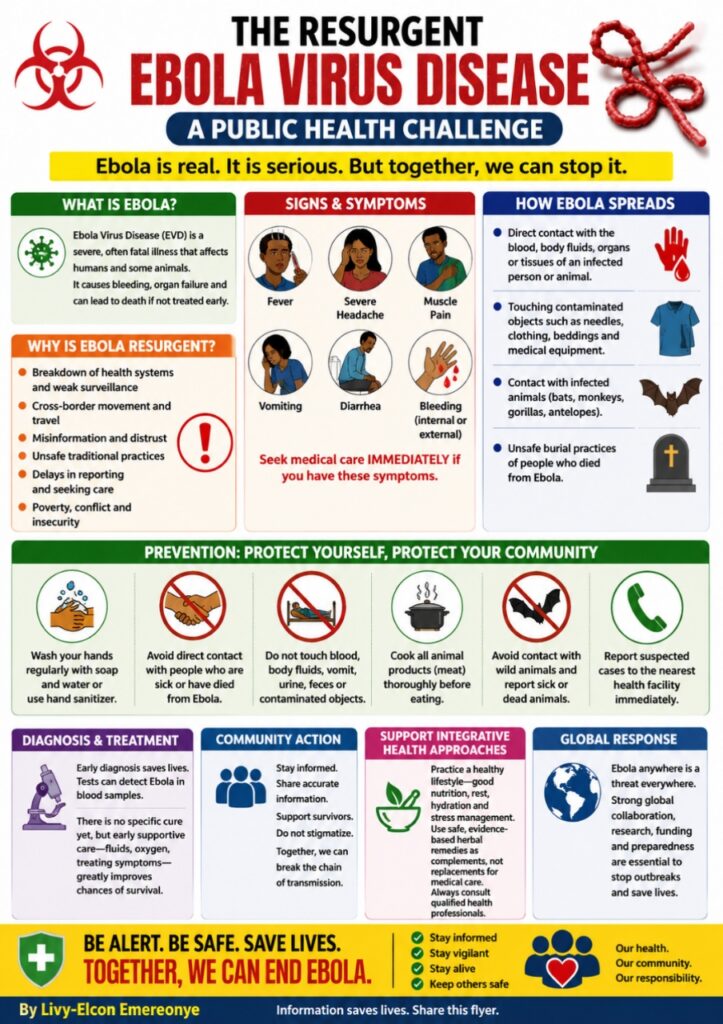
Humans may become infected through:
-Contact with infected bats
-Handling infected wildlife such as monkeys, chimpanzees, gorillas, antelopes, or porcupines
-Consumption of contaminated bush meat
-Exposure to infected animal blood or body fluids
Human-to-Human Transmission
Once introduced into human populations, Ebola spreads through direct contact with:
-Blood
-Vomit
-Saliva
-Sweat
-Urine
-Semen
-Breast milk
-Feces
-Contaminated surfaces or materials
Healthcare workers and caregivers are particularly vulnerable when infection prevention measures are inadequate.
Traditional burial practices involving direct contact with corpses also contribute significantly to transmission.
Signs and Symptoms
The incubation period of Ebola ranges from 2 to 21 days.
Early Symptoms
Initial symptoms are often non-specific and may resemble malaria, typhoid fever, or influenza. They include:
Sudden fever
Severe weakness
Fatigue
Headache
Muscle pain
Sore throat
Loss of appetite
Progressive Symptoms
As the disease progresses, patients may develop:
-Vomiting
-Diarrhea
-Abdominal pain
-Skin rash
-Red eyes
-Difficulty breathing
-Difficulty swallowing
-Internal and external bleeding
-Severe dehydration, organ failure, shock, and death may occur if prompt treatment is not provided.
Epidemiology and Resurgence of Ebola
Ebola outbreaks have mainly occurred in Central and West Africa. Major outbreaks have been recorded in:
Democratic Republic of Congo, Uganda, Guinea, Sierra Leone, Liberia, Sudan etc
The 2014–2016 West African outbreak remains the largest Ebola epidemic in history, causing more than 28,000 cases and over 11,000 deaths.
Despite advances in outbreak response, sporadic resurgences continue to occur. Recent outbreaks in Uganda and the Democratic Republic of Congo have reinforced concerns about the persistent threat of Ebola.
Factors Responsible for the Resurgence of Ebola
1. Weak Healthcare Systems
Many countries vulnerable to Ebola outbreaks suffer from inadequate healthcare infrastructure, shortage of healthcare personnel, poor laboratory capacity, and limited emergency preparedness.

2. Poverty and Poor Living Conditions
Poverty contributes to poor sanitation, overcrowding, malnutrition, and limited access to healthcare services, increasing vulnerability to infectious diseases.
3. Deforestation and Environmental Changes
Human encroachment into forests increases contact between humans and infected wildlife reservoirs.
4. Conflict and Insecurity
Armed conflicts disrupt healthcare delivery, weaken surveillance systems, and hinder outbreak response efforts.
5. Misinformation and Cultural Beliefs
False information, distrust of authorities, and harmful traditional practices can discourage communities from seeking medical help or complying with public health measures.
6. Global Travel and Migration
International travel increases the risk of cross-border transmission and global spread.
7. Inadequate Disease Surveillance
Delayed detection and reporting allow outbreaks to spread before containment measures are implemented.
Public Health Implications of Ebola Resurgence
1. High Mortality and Morbidity
Ebola outbreaks can cause devastating loss of life, especially in resource-limited settings.
2. Healthcare System Collapse
Outbreaks place enormous pressure on hospitals, healthcare workers, and medical supplies.
3. Economic Disruption
Ebola outbreaks negatively affect trade, agriculture, tourism, investment, and productivity.
4. Social and Psychological Impact
Fear, stigma, anxiety, and social isolation are common consequences of Ebola outbreaks.
5. Educational Disruption
School closures during outbreaks interrupt learning and increase social vulnerability.
6. International Health Threat
The potential for international spread makes Ebola a major global health security concern.
Diagnosis of Ebola Virus Disease
Early diagnosis is essential for effective containment and treatment.
Laboratory tests used for diagnosis include:
-Polymerase Chain Reaction (PCR)
-Antigen-capture detection tests
-Serum neutralization tests
-Virus isolation
-Antibody detection tests
Because early symptoms resemble other infectious diseases, differential diagnosis is important.
Treatment and Management
There is no universally curative drug for Ebola, but supportive care significantly improves survival.
Supportive Treatment Includes:
-Oral or intravenous fluids
-Electrolyte correction
-Oxygen therapy
-Blood pressure management
-Nutritional support
-Treatment of secondary infections
Antiviral Therapies
Some monoclonal antibody therapies have shown effectiveness in reducing mortality.
Vaccination
The development of Ebola vaccines represents a major breakthrough in outbreak prevention and control.
Vaccination strategies are especially important for:
-Healthcare workers
-High-risk contacts
-Frontline responders
-Communities in outbreak zones
Prevention and Control Measures
1. Public Health Education
Communities should receive accurate information about:
Modes of transmission
Symptoms
Preventive practices
Early reporting
Safe burial practices
2. Infection Prevention and Control
Healthcare facilities should maintain:
-Hand hygiene
-Personal protective equipment (PPE)
-Isolation units
-Proper waste disposal
-Environmental sanitation
3. Surveillance and Contact Tracing
Rapid identification and monitoring of contacts are critical to interrupt transmission chains.
4. Safe Burial Practices
Specialized teams should handle burial procedures to minimize exposure.
5. Border and Travel Monitoring
Screening at borders and airports can help reduce international spread.
6. Community Engagement
Public cooperation is essential for successful outbreak response.

The Role of Integrative and Community-Based Healthcare
An effective Ebola response requires not only biomedical interventions but also community participation and integrative public health strategies.
Community Participation
Community leaders, religious organizations, traditional rulers, and civil society groups play critical roles in:
Public awareness
Reducing stigma
Promoting early healthcare seeking
Supporting survivors
Nutritional Support
Good nutrition helps strengthen immunity and improve recovery outcomes.
Patients recovering from infectious diseases require adequate:
-Proteins
-Vitamins
-Minerals
-Hydration
-Mental Health Support
Psychological counseling and emotional support are essential for survivors, families, and healthcare workers.

Herbal Medicine and Traditional Health Practices
Traditional medicine remains an important aspect of healthcare in many African communities. However, herbal remedies should not replace scientifically approved Ebola treatment protocols.
Some medicinal plants possess immune-supportive, anti-inflammatory, antioxidant, or antimicrobial properties that may support general wellness. Nonetheless, herbal interventions should only be used responsibly and under professional guidance.
Public health authorities should collaborate with traditional healers to:
i. Encourage early referral of suspected cases
ii. Reduce misinformation
iii. Promote infection prevention practices
iv. Improve community trust
Integrating culturally acceptable health education with evidence-based medicine may improve outbreak response effectiveness.
Challenges Facing Ebola Control Efforts
Several obstacles continue to hinder Ebola prevention and control. They include among others:
-Insufficient funding
-Limited healthcare infrastructure
-Vaccine access inequities
-Political instability
-Community resistance
-Poor transportation systems
-Inadequate research capacity
-Healthcare worker shortages
Addressing these challenges requires sustained political commitment and international cooperation.
Lessons from Previous Outbreaks
Past Ebola outbreaks have provided important public health lessons:
Early detection saves lives
Community trust is essential
Strong healthcare systems improve resilience
International collaboration is necessary
Public communication must be transparent
Preparedness should be continuous, not reactive
Countries that invest in preparedness and surveillance are better equipped to respond rapidly to outbreaks.
The Global Health Perspective
Ebola demonstrates how local outbreaks can rapidly become international emergencies.
Global health organizations such as:
World Health Organization (WHO)
Africa Centres for Disease Control and Prevention (Africa CDC)
UNICEF
Médecins Sans Frontières (MSF)
Centers for Disease Control and Prevention (CDC), among others, continue to play important roles in:
-Outbreak response
-Research
-Vaccine deployment
-Healthcare worker training etc
Public health education
International solidarity and resource sharing remain critical to preventing future epidemics.
Conclusion
The resurgence of Ebola Virus Disease remains a serious public health challenge with significant medical, social, economic, and global implications. Although progress has been made in diagnostics, treatment, vaccination, and outbreak management, persistent weaknesses in healthcare systems and socio-economic conditions continue to fuel recurring outbreaks.
Combating Ebola requires a comprehensive approach involving strong healthcare infrastructure, effective surveillance systems, public health education, vaccination, community participation, research, and international cooperation.
Governments, healthcare professionals, researchers, traditional leaders, and communities must work together to strengthen preparedness and response mechanisms. The fight against Ebola is not solely a medical responsibility but a collective global obligation.
By investing in resilient health systems, promoting evidence-based public health practices, and fostering community trust, the world can reduce the threat posed by Ebola Virus Disease and protect future generations from devastating outbreaks.
Accurate information, early reporting, community cooperation, and responsible healthcare practices remain essential in reducing the spread and impact of Ebola Virus Disease globally.
PS: Dr. Emereonye could be reached on: +234 803 3922 445
References
1. World Health Organization (WHO) – Ebola Virus Disease Fact Sheet https://www.who.int/news-room/fact-sheets/detail/ebola-virus-disease
2. World Health Organization (WHO) – Ebola Disease Outbreak News https://www.who.int/emergencies/disease-outbreak-news
3. Centers for Disease Control and Prevention (CDC) – Ebola Information https://www.cdc.gov/ebola/
4. Africa Centres for Disease Control and Prevention (Africa CDC) https://africacdc.org/
5. Feldmann H., Geisbert T.W. “Ebola haemorrhagic fever.” The Lancet (2011). https://www.thelancet.com/journals/lancet/article/PIIS0140-6736(10)60667-8/fulltext
6. National Institutes of Health (NIH) – Ebola Research https://www.nih.gov/research-training/medical-research-initiatives/ebola-research
7. UNICEF – Ebola Response and Community Engagement https://www.unicef.org/emergencies/ebola
8. Médecins Sans Frontières (MSF) – Ebola Response https://www.msf.org/ebola
9. World Bank – The Economic Impact of Ebola https://www.worldbank.org/en/topic/pandemics/brief/2014-ebola-epidemic-west-africa
10. The New England Journal of Medicine – Ebola Research Articles https://www.nejm.org/doi/full/10.1056/NEJMra1410860
11. BMJ Global Health – Strengthening Health Systems Against Ebola https://gh.bmj.com/
12. The Lancet Infectious Diseases – Ebola and Public Health Response https://www.thelancet.com/journals/laninf/home
13. Nature Reviews Microbiology – Ebola Virus Biology and Pathogenesis https://www.nature.com/articles/nrmicro3144
14. CDC – Infection Prevention and Control Recommendations https://www.cdc.gov/vhf/ebola/clinicians/evd/infection-control.html
15. WHO – Clinical Management of Ebola Virus Disease https://www.who.int/publications/i/item/clinical-management-of-patients-with-viral-haemorrhagic-fever
16. WHO – Ebola Vaccines and Vaccination Strategies https://www.who.int/news-room/questions-and-answers/item/ebola-vaccines
17. CDC – Safe and Dignified Burial Practices https://www.cdc.gov/vhf/ebola/prevention/index.html
18. International Journal of Environmental Research and Public Health – Zoonotic Diseases and Environmental Risk Factors https://www.mdpi.com/journal/ijerph
19. Journal of Infectious Diseases – Ebola Epidemiology https://academic.oup.com/jid
20. United Nations Development Programme (UNDP) – Ebola Recovery and Economic Impact https://www.undp.org/
Leave a comment